


What to Look for in a High-Tech Simulation Lab for Medical Students?
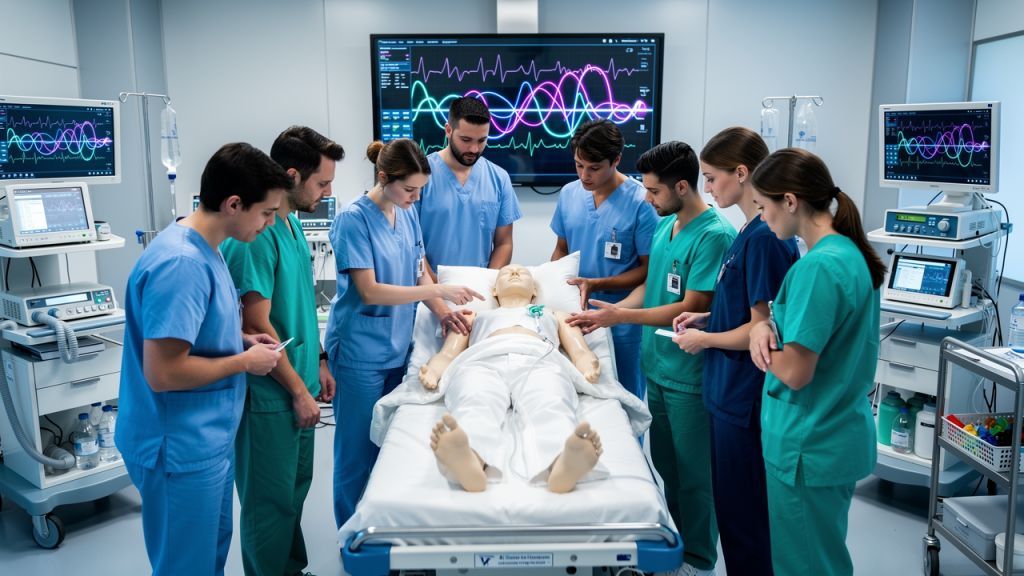
A modern medical simulation lab is no longer a side room with a mannequin and a stethoscope. It has become the baseline expectation for programs that want graduates arriving on the ward with working hands and a working head. As described in Wikipedia's overview of medical simulation, the field now includes debriefing rooms, procedure rooms, control rooms, and standardized patient encounters, all built around transferring knowledge into behavior before a real patient is involved.
A serious simulation center for medical students bridges classroom theory and the unpredictability of a clinical shift. What to look for in a high-tech simulation lab for medical students starts with one question: does the technology change how a student thinks, or does it simply look impressive during a tour? A physical clinical skills lab earns its value through repeated exposure to clinical decision-making and patient safety training, not through screen resolution. Technology integration only matters when it produces hands-on medical education a student can repeat until the movements become automatic.
The Mistake of Judging a Medical Training Facility by Its Equipment Alone
A frequent mistake among prospective students is ranking a medical training facility by the number of expensive machines visible in the room. Must-have medical simulation equipment exists on a spectrum, and what makes a high-tech medical lab effective is not the price tag but whether each tool serves a defined teaching purpose.
High-fidelity simulation vs low-fidelity simulation models
High-fidelity simulation mannequins reproduce physiological responses: dilating pupils, a palpable pulse, a chest that rises in sync with programmed vital signs. Low-fidelity simulation tools are static, such as a foam arm for injections. Both belong in a rounded curriculum, since skipping the low-fidelity stage in favor of the flashiest mannequin tends to slow early skill formation rather than speed it up.
Task trainers and procedural skills training equipment
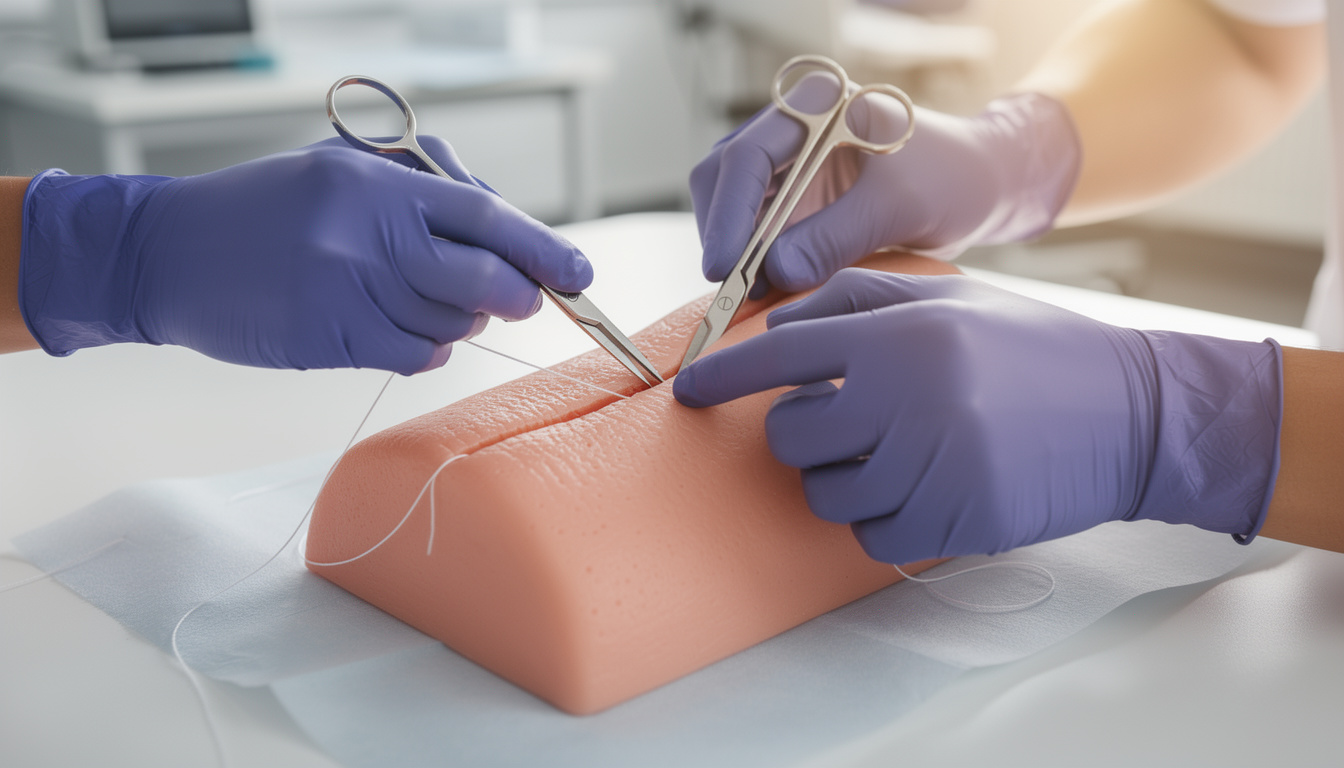
Task trainers are narrow-purpose devices built for one job: an arm for intraosseous access, an airway model for intubation, a pad for suturing. Procedural skills training on these trainers lets a student fail privately and repeat the same motion before applying it to a full-bodied mannequin.
Integrating VR, AR, and immersive healthcare training tools
Virtual and augmented reality now appear in mock clinical environments, letting a student move through a three-dimensional ward before entering one physically. Medical education technology built on virtual reality improves situational awareness. These tools enhance visualization; they do not replace physical practice on tissue, task trainers, or mannequins.
Standardized Patients Turn Physical Tasks Into Human Scenarios
Even a facility loaded with electronics still needs actors. Standardized patients change the training dynamic from mechanical tasks to relational, sometimes uncomfortable, human interaction. Live actors allow a student to practice patient interviewing, history taking, mental health assessments, and physical examinations in a setting where mistakes are corrected rather than carried into a real appointment. These encounters support clinical competency development and communication skills training that a mannequin cannot replicate.
Many programs pair actor sessions with mock exam rooms for OSCE preparation, letting instructors assess bedside manner under exam-like conditions. Combining standardized patients with physical task trainers produces bedside simulation closer to a real shift than either method alone, as illustrated on Stanford Medicine's standardized patient program page, which outlines how the model is structured and assessed.
Measuring What Matters: Debriefing Metrics Over Scenario Counts

The number of scenarios a student completes says little on its own. Learning in simulation happens mostly during the structured review that follows a task, not during the task itself. Debriefing in simulation is the analytical core of simulation-based medical education, and a facility that rushes this step wastes much of the value of the scenario that preceded it. Structured evaluation protocols are what actually improve skills retention and prepare a student for team-based simulation, where multiple providers coordinate under pressure. The NCBI Bookshelf guide on debriefing techniques lays out the frameworks separating a useful debrief from an informal chat.
Immediate post-scenario reflection
Reflecting on an action while it is fresh lets a student examine the reasoning behind a decision, not only the outcome. A delayed general report tends to miss the exact moment a diagnostic path went wrong.
Video-assisted debriefing and faculty-guided training
Audio-visual recording lets a student watch hand movements, posture, and team communication during a scenario. This only works with faculty-guided training attached, an experienced mentor who turns a recording into a specific lesson rather than a source of embarrassment.
Digital Simulation Versus Cadaver-Based Training: A Comparison
A vital differentiator for medical students is whether simulated practice is paired with anatomy training on real tissue. The strongest setups combine digital simulator preparation with cadaver-based training, giving students a repeatable digital layer alongside a tactile, anatomically variable physical one. This integration typically happens inside a dedicated surgical skills lab, where procedural rehearsal repeats safely across multiple attempts.
Working with real specimens exposes a student to tissue realism and anatomical variation that a plastic mannequin or a screen cannot reproduce; no two cadavers present identically, which mirrors the variability of real patients far more than any standardized model. This dual method bridges simulated decision-making with genuine manual skill, leaving students with a degree of procedural confidence that digital tools alone rarely produce.
Evaluating a Simulation Center: Questions That Matter More Than Displays

Touring a facility with impressive screens and a fleet of mannequins reveals little about medical student preparedness before clinical rotations begin. Deliberate practice, repeated, self-directed, corrected, matters more than equipment on display, and access frequency is the clearest indicator of whether that practice actually happens.
| Question to Ask | What the Answer Reveals |
|---|---|
| How often can students access simulators outside scheduled class time? | Whether deliberate, voluntary practice is actually possible |
| Is there faculty oversight in the lab outside mandatory hours? | Whether mistakes are corrected early or repeated unnoticed |
| Are remediation sessions offered for struggling students? | Whether skill gaps are treated as normal or ignored |
| Is the curriculum built for the student's stage, not shared with residents? | Whether training matches actual developmental level |
| How are anatomy study and procedural simulation paired? | Whether digital and physical training actually connect |
Answers to these questions tend to expose more about a program's actual quality than any brochure describing its technology.
What separates a simulation lab from a general skills lab?
A skills lab often focuses on static, repeatable tasks like suturing, while a simulation lab layers in physiological response, standardized patients, and structured debriefing to reproduce full clinical decision-making, not just isolated motor skills.
Does virtual reality replace cadaver-based training?
No. Virtual and augmented reality tools improve spatial awareness and visualization, but they do not reproduce tissue variability or tactile feedback, which is why cadaver-based sessions remain part of well-rounded programs.
Why does debriefing matter more than the number of scenarios completed?
A scenario without structured review teaches little, since students rarely correct their own reasoning without guided feedback. Structured debriefing is where most of the actual skills retention takes place.
What should a student ask about lab access before enrolling?
Questions about unscheduled practice hours, faculty availability outside class time, and remediation options reveal more about a program's teaching quality than the number of mannequins in the room.
About the Business
Biotech Anatomy LTD operates a state-of-the-art facility providing practical anatomy and surgical education, offering cadaver-based training and R&D services to surgeons, medical students, healthcare professionals, researchers, and medical device development companies. The organization works with universities, hospitals, and educational institutions to build, equip, and optimize a state-of-the-art simulation lab for medical students, bridging the gap between theory, virtual tools, and physical medical precision.